

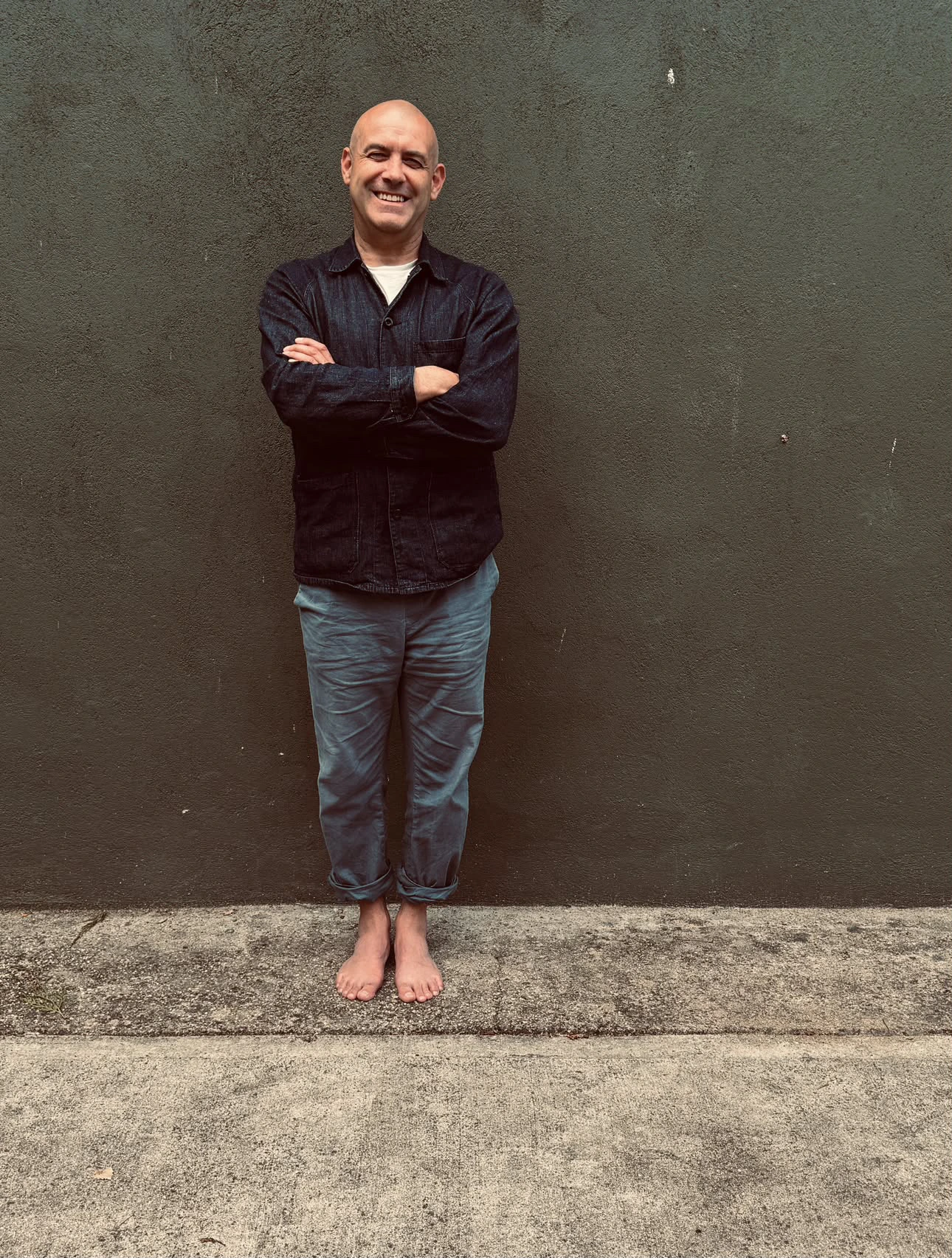
David Quinn (b. 1971, Dublin) creates intimate, understated abstract paintings. Over a career spanning more than three decades, Quinn has developed a deeply meditative studio practice focused on the relationship between scale, surface texture, and the passage of time.
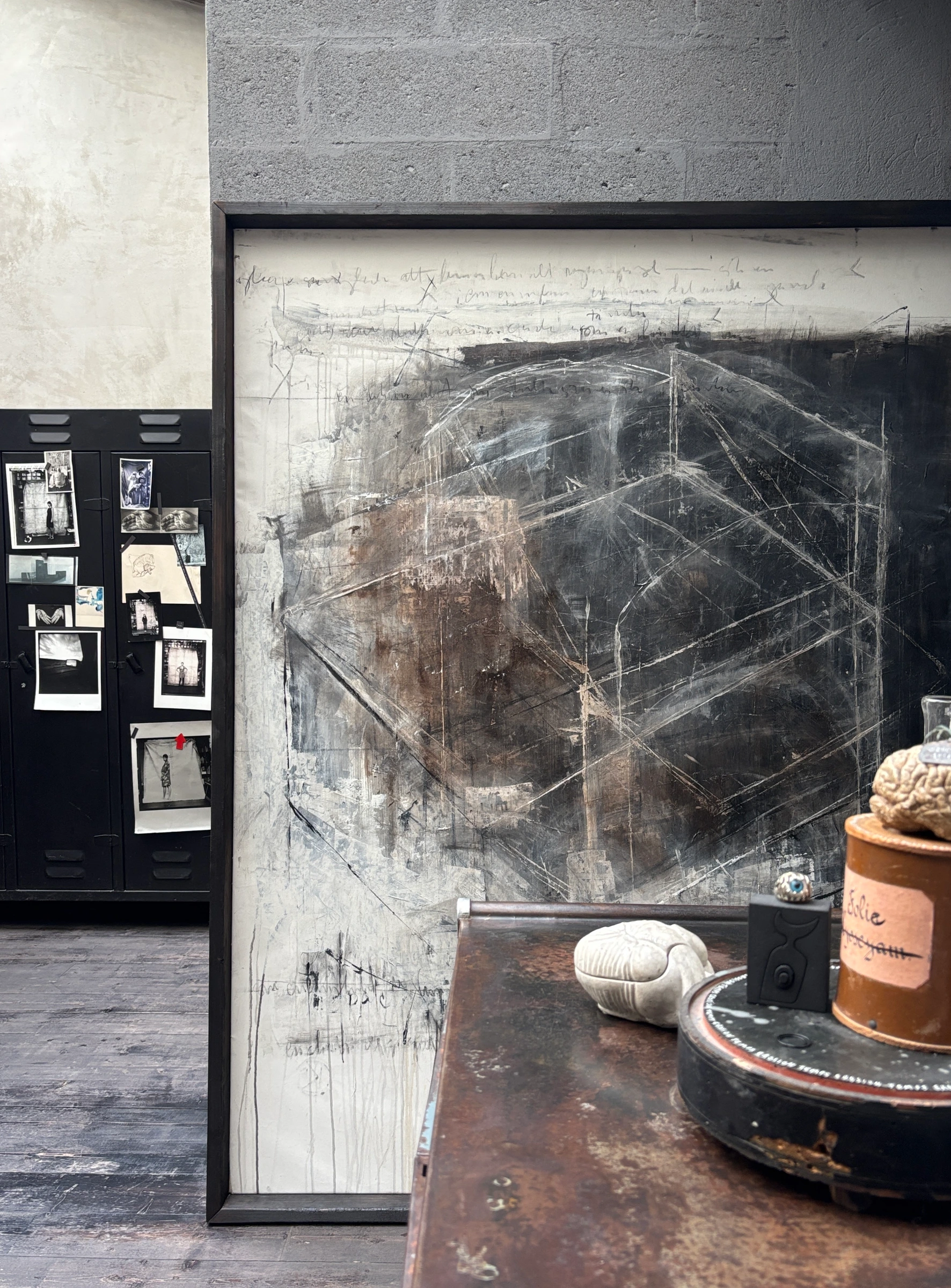
David Quinn
David Quinn (b. 1971, Dublin) creates intimate, understated abstract paintings. Over a career spanning more than three decades, Quinn has developed a deeply meditative studio practice focused on the relationship between scale, surface texture, and the passage of time.
Working simultaneously across multiple wood and paper panels, Quinn builds up dense, multilayered surfaces that mirror the slow accumulation of sedimentary rock. Through an instinctive process of layering, scratching away, and painting over, his surfaces act as physical palimpsests — vessels that document the very passage of time spent in their creation. His work relies on repetitive mark-making, subtle grids, and fine lines influenced by Japanese wabi-sabi philosophy and musical notation. Historically constrained to a signature "notebook scale" (8 x 5 inches), his recent output also includes larger abstract canvases.
The recipient of the 2015 Tony O'Malley Studio Residency Award, Quinn has presented nearly forty solo exhibitions globally, including recent showcases in London, Tokyo, Seoul, Brussels, and Edinburgh. His work is held in private collections worldwide, and in institutional collections in Ireland including the Irish Office of Public Works, Bank of Ireland and the Allied Irish Banks.
He lives and works in Shillelagh, County Wicklow.
Statement
So much about art remains a mystery to me. As Rilke wrote, works of art are mysterious existences whose life endures alongside ours. In the studio, my aim is simply to create the right environment, set parameters, work away, and make space for something meaningful to emerge. My process involves careful preparation and patient waiting, punctuated by pleasant surprises when something almost magical occurs. It is extraordinary how tiny the difference can be between a mediocre painting and one that possesses what Patrick Kavanagh called "the flash". It is never entirely a matter of intention; there is something else at play that I cannot control, but can only welcome. Like a haiku, I try to make my paintings as succinct as possible, eliminating anything extraneous. Yet, my work is expressionist rather than minimalist. I see my pieces as diary entries rather than cold, formal exercises.
Having studied meditation rooted in Buddhism, this practice naturally informs my work. Repetitive mark-making is a central part of my process — a visual form of mantra making, or that which protects the mind. By working in this rhythm, I am able to paint in a state of relaxed attention.
Working primarily within a fixed 20.5 x 13.5 cm format, I embrace the freedom of a scale that demands no grand studio - only a kitchen table or a traveling bag. This constraint allows for rapid experimentation where the stakes are low but the intimacy is high.
My work draws inspiration from the compact, poetic economies of Kurt Schwitters, Paul Klee, and Forrest Bess, as well as the spiritual focus of old Russian icons and Persian miniatures. Much like the philosopher Simonides noted that "painting is silent poetry", I view these small-scale pieces as visual haikus. They hold the tactile, nostalgic presence of well-worn paperback books, offering the viewer an invitation to lean in close and experience art as a quiet, private dial